


Can Low Iron Cause Hair Shedding?
Last Updated: November 15, 2026
Quick Summary
Low iron may be linked to hair shedding in some people, but research does not show it causes shedding in everyone. Shedding has many possible causes, and iron is only one of them. A healthcare professional can help determine whether low iron is involved.
- Research on low iron and hair loss remains mixed, with some sources linking it to shedding and others not.
- Iron deficiency may disrupt the hair growth cycle, often causing diffuse thinning across the scalp.
- Only a healthcare professional can determine whether iron is low; a clinician may recommend testing when clinically appropriate.
- Iron supplements carry risks, so taking iron without a confirmed need is not advisable.
- Hair grows about half an inch (1 cm) per month, so any change takes several months to show.
Table of Contents
- Can Low Iron Cause Hair Shedding? What the Research Says
- How Iron Deficiency Hair Shedding May Develop
- What Iron Deficiency Hair Changes Look Like
- How to Check Whether Low Iron May Be Involved
- How Long Hair Changes From Iron Deficiency May Last
- Iron Supplements and Hair Shedding: Why Caution Matters
- Your Next Step: Talking With a Healthcare Professional About Shedding
- Frequently Asked Questions
Can Low Iron Cause Hair Shedding? What the Research Says
Low iron may be linked to hair shedding in some people, but the research does not show that it causes shedding in everyone. Trost and colleagues found that some sources link iron deficiency to several forms of hair loss, while others do not (The diagnosis and treatment of iron deficiency and its potential relationship to hair loss).
If you are losing more hair than usual, it helps to understand how iron might play a role and what it cannot tell you on its own.
How Iron Deficiency Hair Shedding May Develop
Hair grows in cycles. Each hair moves through a growth phase, a short transition phase, and a resting phase before it sheds.
Some sources suggest that iron deficiency may disrupt this cycle. Shedding linked to a disruption like this is often called telogen effluvium.
The mechanism is not fully settled. Researchers still debate how much iron status contributes compared with other factors such as stress, illness, or hormonal changes.
What Iron Deficiency Hair Changes Look Like
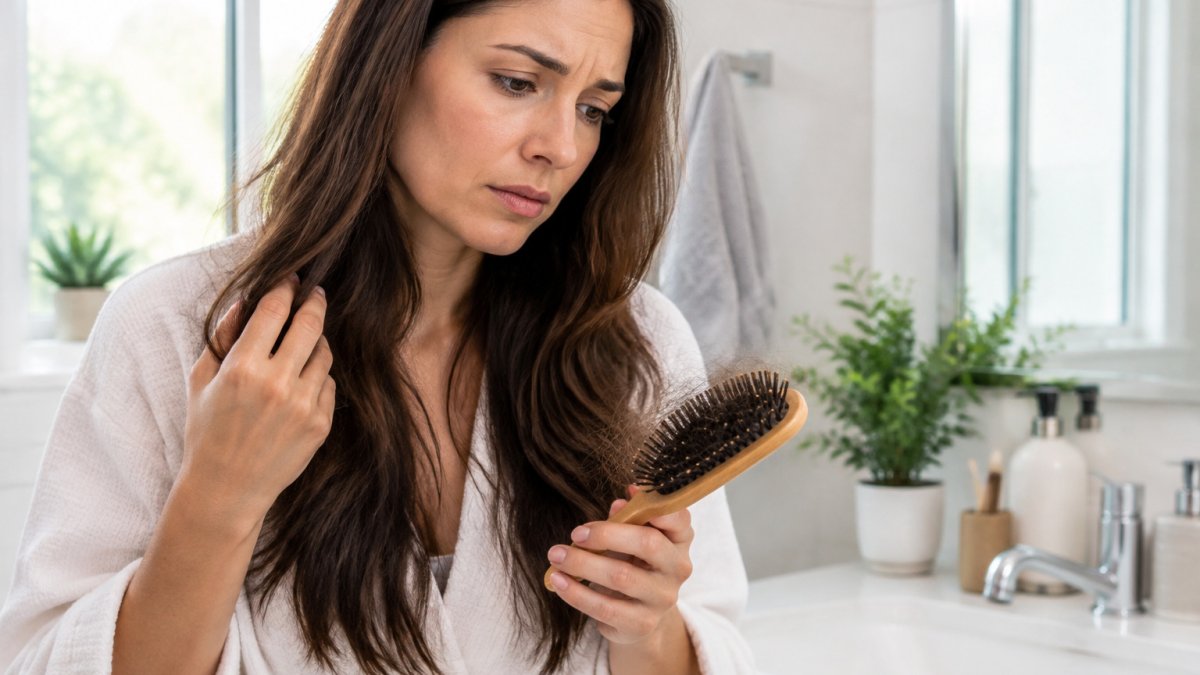
People who notice shedding linked to low iron often describe a few patterns:
- Hair falls out more when brushing or washing
- The part line looks wider than before
- Thinning spreads across the whole scalp
These changes are not unique to iron deficiency. Many other causes can look the same. That is why a pattern alone cannot confirm the cause.
Other symptoms, such as tiredness, pale skin, or shortness of breath, may appear alongside hair changes. A healthcare professional can help sort out what is going on.
How to Check Whether Low Iron May Be Involved
Checking iron status is a medical question, not a self-assessment. Only a healthcare professional can determine whether iron levels are low and whether they might be contributing to shedding.
A practical pathway looks like this:
- Build a timeline. Note when the shedding started, whether it came on suddenly or gradually, and whether it has stayed steady, worsened, or eased. Shedding that began a few months after a triggering event follows a different pattern than shedding that has crept up over a year.
- List recent changes. Pregnancy, childbirth, illness with fever, surgery, significant weight loss, a new restrictive diet, heavy menstrual periods, and major stress are all relevant. So is any new medication or supplement.
- Describe the pattern. Diffuse thinning across the whole scalp looks different from a widening part, a receding hairline, or discrete patches. Bring photos from before and after if you have them.
A clinician will typically consider more than iron. Thyroid function, other nutritional shortfalls, hormonal shifts, and medication effects can all produce shedding that looks identical. Ask what they are testing for and why, and ask what the results would change about the plan.
Why the Cause of Low Iron Matters
If iron is low, the next question is why. Replacing iron without understanding the cause can leave the underlying issue unaddressed. Common contributors a clinician will consider include:
- Dietary intake. Limited iron intake, or a diet low in the forms of iron the body absorbs most readily, is a frequent factor.
- Heavy menstrual bleeding. Monthly blood loss is one of the most common reasons iron stores run down, and it is often normalized rather than investigated.
- Pregnancy and childbirth. Iron needs rise substantially during pregnancy, and stores can remain depleted afterward.
That list is not a checklist to self-diagnose against. It is a map of what a clinician is weighing when they decide which questions to ask and which tests, if any, to order.
Questions Worth Asking
Bringing a short list of questions makes the appointment more productive:
- Could low iron be contributing to my shedding, and what makes you suspect it or not?
- Is testing appropriate for me right now, and what would you test?
- If my iron is low, what is likely causing it, and how will we look into that?
- What should I expect in terms of follow-up, and when should I come back?
For broader practical steps on shedding, see Excessive Hair Shedding: Causes and Practical Steps.
How Long Hair Changes From Iron Deficiency May Last
Hair grows about half an inch (1 cm) per month, and a new hair takes a couple of weeks just to reach the scalp surface, so changes take time to show.
Expect that improvement, if it happens, may take several months to become visible.
For life-stage factors that affect recovery, see Hair Health During Menopause: A Complete Guide. Shedding after pregnancy follows its own pattern, which is explained in Can Nutrition Support Postpartum Hair Shedding?.
The timing points at a glance:
| Point | Detail | Note |
|---|---|---|
| Hair growth rate | About half an inch (1 cm) per month | Changes take time to appear |
| Timeline for improvement | May take several months to become visible | Varies from person to person |
| Shedding from a temporary cause | May slow once the cause is addressed | Not guaranteed |
| What to do meanwhile | Track how hair looks and feels over time | Share notes with your clinician |
Iron Supplements and Hair Shedding: Why Caution Matters
Iron is essential, but more is not automatically better, and unsupervised supplementation carries real risk. Readers choosing any supplement can review general safety standards to look for before buying for guidance on evaluating products. Taking iron when you do not need it is not a harmless habit.
The Risks of Self-Treating With Iron
- Excess iron can be harmful. Iron that accumulates beyond need can cause problems over time, which is why iron should reflect individual need.
- Side effects are common. Constipation, nausea, stomach upset, and dark stools are frequently reported with iron supplements. These are not dangerous on their own, but they are unpleasant and can lead people to stop or change doses without guidance.
- Interactions matter. Iron can affect how other medications and supplements are absorbed, and some medications affect iron absorption in turn. A pharmacist is the right person to review your full list before you add anything.
- It can mask the real cause. If shedding is being driven by something other than iron, or by iron loss from a source that needs investigation, supplementing can make the numbers look better while the underlying issue continues.
What Supplementation Can and Cannot Do
When a clinician has confirmed a shortfall and recommended supplementation, correcting it is a medical matter guided by that professional. In that context, a supplement can help correct a nutrient shortfall a clinician has identified.
This is the distinction that matters most: correcting a diagnosed shortfall is different from taking iron in the hope of improving hair. The first is targeted; the second is a guess with potential downsides.
Nutrition, Supplements, and Topical Care: What Each Can and Cannot Do
A useful way to think about hair support is in layers, each with a defined job:
- Nutrition supplies the raw materials used in normal hair structure and maintenance. A varied diet supports that baseline. Nutrition cannot compensate for a medical cause of shedding, and thinning hair does not prove a deficiency.
- Internal supplements can help fill a gap when one is identified, and formulas built around nutrients used in normal hair structure are designed for ongoing support rather than correction of a medical condition. They are not treatments, and they do not replace evaluation.
- Topical care supports the scalp and hair environment, the surface conditions in which hair grows and is handled. It works alongside internal support rather than instead of it.
Biotin deserves a specific note here, because it is often assumed to be risk-free at any dose. Biotin is essential, but deficiency is uncommon, and high doses are not automatically better. High-dose biotin can also interfere with certain lab tests, which the FDA has warned about (FDA safety communication on biotin interference with lab tests). If you take a biotin-containing product and your clinician orders labs, tell them.
The Inside + Outside Approach
BENEGANIC USA takes a complementary inside-and-outside view of hair health. Internal formulas supply nutrients used in normal hair structure and maintenance, and topical products support the scalp and hair environment. In a 90-day placebo-controlled trial of 50 women, Cynatine HNS taken with vitamins and minerals was associated with improvements in measured hair and nail parameters versus placebo (Cynatine HNS clinical trial). That finding applies to the studied formula, group, and duration, not automatically to every finished product. The BENEGANIC Keratin Hair Booster formulas are built around Cynatine HNS; they support normal hair structure and do not treat low iron or its causes.
Explore Hair Health Solutions to learn more about the range.
Your Next Step: Talking With a Healthcare Professional About Shedding
If your shedding is sudden, heavy, patchy, or ongoing, schedule a visit with a dermatologist or qualified healthcare professional. This is especially important if you have a medical condition, take regular medications, or notice other symptoms.
Bring your notes on timing, changes in your health, and any supplements you take. Ask direct questions: Could low iron be involved? Is testing appropriate for me? What other causes should be ruled out?
Frequently Asked Questions
What are the worst symptoms of low iron?
Low iron can cause fatigue, shortness of breath during activity, pale skin, dizziness, and cold hands or feet, among other symptoms. Many people with mild iron deficiency have few noticeable signs, which is why symptoms alone are not a reliable way to judge iron status. Persistent fatigue or breathlessness deserves a conversation with a healthcare professional, who can decide whether blood tests are appropriate. Self-diagnosing based on symptoms alone can lead to missed causes or unnecessary supplement use.
Does shedding linked to low iron settle?
The research on iron and hair loss is not settled, so there is no guaranteed outcome. Hair grows about half an inch (1 cm) per month, and shedding linked to a temporary disruption of the hair growth cycle may ease once the underlying issue is addressed. Recovery timelines vary, and some people may not see a change at all. A healthcare professional can help identify the cause and set realistic expectations for monitoring.
Should someone take iron supplements for hair shedding?
Iron supplements should not be started for hair shedding alone. Iron needs are individual, and excess iron can be harmful. Taking iron without a clinical reason can cause side effects such as constipation or stomach upset, and it may mask other problems. Anyone considering iron should speak with a healthcare professional first, and a pharmacist can answer questions about timing and interactions with other medicines.
When should someone see a healthcare professional about hair shedding?
See a dermatologist or qualified healthcare professional if shedding is sudden, persistent, patchy, or unexplained, or if it comes with scalp irritation, fatigue, or other symptoms. People with thyroid conditions, autoimmune disorders, or who take medications should also seek guidance. A professional can evaluate possible causes, including iron status when clinically appropriate, and recommend suitable next steps.
These statements have not been evaluated by the Food and Drug Administration. This product is not intended to diagnose, treat, cure, or prevent any disease. This article is educational and is not medical advice.
