


Excessive Hair Shedding: Causes and Practical Steps
Table of Contents
- What Excessive Hair Shedding Usually Means (and What It Doesn't)
- Common Causes of Excessive Hair Shedding
- Hair Shedding vs Hair Loss: How to Tell the Difference
- How to Reduce Hair Shedding: A Step-by-Step Plan
- What Nutrition and Topical Care Can and Cannot Do
- When to See a Dermatologist for Hair Shedding
- Conclusion: A Realistic Plan for Healthier-Looking Hair
- Frequently Asked Questions
Last Updated: November 1, 2026
What Excessive Hair Shedding Usually Means (and What It Doesn't)
Excessive hair shedding is a temporary increase in the number of hairs leaving the scalp each day, usually in response to a stressor such as illness, stress, hormonal shifts, or a change in nutrition. It differs from progressive hair loss, which tends to thin specific areas over time. This guide explains how to reduce excessive hair shedding by working through causes and practical steps.
Everyone loses some hair daily as part of the normal growth cycle. According to the American Academy of Dermatology, excessive shedding commonly follows stressors such as high fever, surgery, illness, significant weight loss, or giving birth; it often peaks a few months after the stressor, stops as the body readjusts, and fullness usually returns within six to nine months. If the stressor stays, shedding can last much longer. That shapes everything below: the goal is not to force hair to stay in, but to reduce what is pushing it out.
Shedding is not the same as balding. It is diffuse, spread across the whole scalp, and usually settles once the trigger eases.
Common Causes of Excessive Hair Shedding
Causes of excessive hair shedding cluster into two groups: physical or emotional triggers, and internal factors like nutrition, hormones, and medication. Genetics and autoimmune conditions also affect hair, but they usually cause patterned or patchy hair loss rather than temporary shedding, which is why a clinician's view matters when the picture is unclear.
Stress, Illness, and Life-Stage Triggers
Physical stress is the most common driver. High fever, surgery, significant weight loss, and emotional strain can all push hairs into a resting phase, so they fall out weeks later. Pregnancy and postpartum changes follow the same pattern, with shedding typically appearing a few months after delivery. Menopause and perimenopause bring their own hormonal shifts that can affect hair quality and density.
Nutrition, Hormones, and Medication Factors
Nutrition plays a supporting role, not a starring one. Low iron, inadequate protein intake, and certain vitamin shortfalls are associated with shedding, but thinning hair alone does not prove a deficiency. Hormonal conditions such as thyroid disorders can contribute, and some medications list hair shedding as a known effect. Never stop or change a prescription without talking to the prescriber.
Hair Shedding vs Hair Loss: How to Tell the Difference
Hair shedding and hair loss are different problems with different patterns. Shedding is diffuse and temporary; hair loss is often patterned and progressive.
| Feature | Shedding | Hair Loss |
|---|---|---|
| Pattern | Spread across scalp | Thinning patches or a receding line |
| Speed | Sudden, over weeks | Gradual, over months or years |
| Common trigger | Stress, illness, hormones | Genetics, ongoing conditions |
| Typical outcome | Often settles on its own | Usually needs ongoing management |
A simple test helps. Gather a small section of hair and run your fingers from root to tip. A few strands is normal. Clumps every time warrant a closer look. If the pattern is patchy, sudden, or paired with scalp inflammation, that points toward evaluation rather than self-care.
How to Reduce Hair Shedding: A Step-by-Step Plan
How to reduce hair shedding comes down to three moves: measure the problem, remove the trigger where possible, and support the hair root with nutrition. This plan requires consistent effort to show a clear trend, so give each step time before judging it.
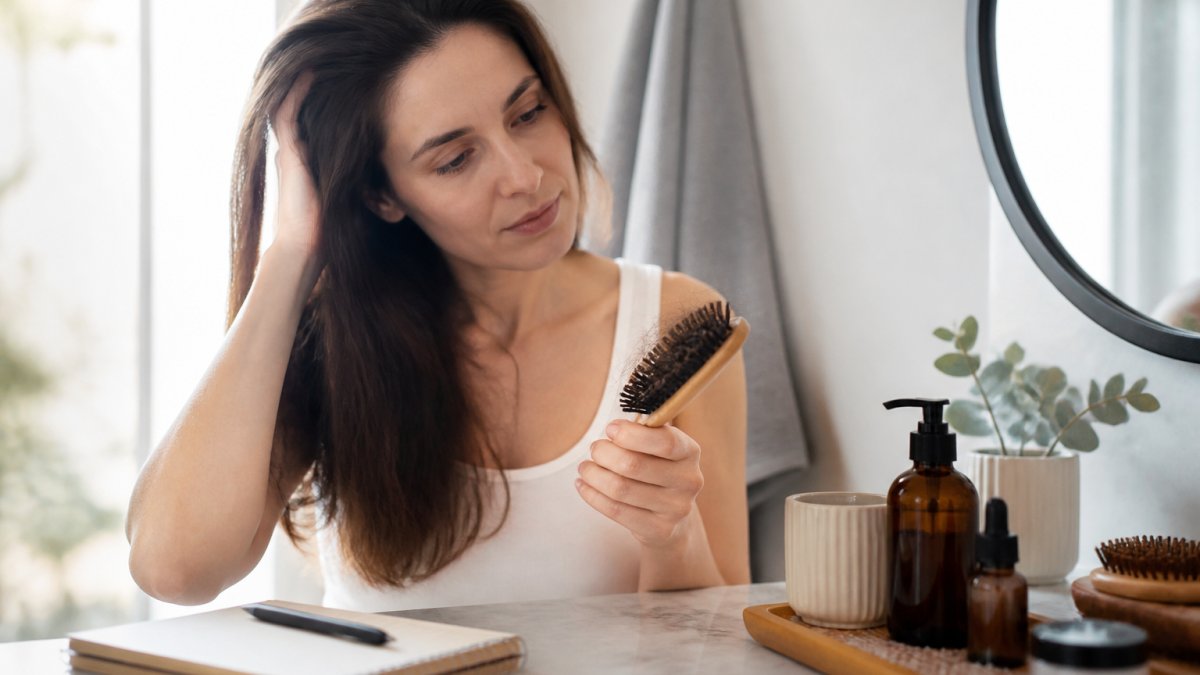
Step 1: Track Shedding Before You Change Anything
Start with a baseline. Photograph your part and hairline in the same light, and jot down how the brush and shower drain look on wash days. This turns a vague worry into a record you can compare over weeks. Without a baseline, every change feels like it worked and nothing feels measurable.
Step 2: Remove or Reduce the Trigger Where You Can
Where the trigger is identifiable, address it. That may mean resting after illness, managing stress, or reviewing a new medication with a clinician. The AAD notes that shedding can persist when the triggering stressor remains, so easing the cause matters more than any product.
Step 3: Support the Hair Root With Nutrition
Hair is built at the root, from nutrients delivered through the bloodstream. Eat enough protein, include iron-rich foods, and keep meals regular during a stressful period; a review of diet and hair covers how nutrition and hair connect. Thinning hair does not prove a deficiency, and a clinician may recommend testing when clinically appropriate. Hair grows about half an inch (1 cm) a month, so give any nutritional routine at least three months before judging it.
What Nutrition and Topical Care Can and Cannot Do
Nutrition and topical care can support normal hair health. They cannot treat a medical cause of hair loss.
- Nutrition can: support hair structure, help maintain normal growth, and fill genuine nutrient gaps.
- Topicals can: support a healthy scalp environment and improve how hair looks and feels.
- Neither can: diagnose a cause, replace medical treatment, or guarantee a result.
A common mistake is expecting a supplement to fix a hormonal or autoimmune condition. It will not. Where evidence is mixed or preliminary, treat claims with caution. Iron is a good example: it is needed, but too much can be harmful, so intake should reflect individual need rather than guesswork.
When to See a Dermatologist for Hair Shedding
See a dermatologist for hair shedding when it is sudden, persistent beyond a few months, patchy, or accompanied by scalp pain, itching, or inflammation. A clinician can assess thyroid function, nutritional status, and other factors where appropriate, and may recommend testing when it is clinically justified.
Book an appointment if you notice any of these:
- Shedding that continues for many months without easing
- Bald patches or a widening part
- Scalp redness, scaling, or tenderness
- Shedding alongside fatigue, weight change, or other symptoms
Self-diagnosis through a home test is not a substitute for evaluation. Bring your tracking notes to the visit; a clear timeline helps.
Conclusion: A Realistic Plan for Healthier-Looking Hair
Shedding is usually a signal, not a verdict. Track it, ease the trigger where you can, support the root with nutrition, and get professional input when the pattern does not fit.
For those who want to add internal support to their routine, the Beneganic USA Keratin Hair Booster formulas for women 18-45, women 45+, and men are built around Cynatine HNS with selected vitamins and minerals. In a 90-day placebo-controlled trial, 50 women took Cynatine HNS, a hydrolyzed keratin, combined with vitamins and minerals, and showed statistically significant improvements in the measured hair and nail parameters compared with placebo. That finding applies to the studied ingredient formula, group, and duration, not automatically to every finished product that contains the ingredient. The formulas support normal hair health from within; they do not treat the cause of shedding. Explore Hair Health Solutions to see the Beneganic inside + outside approach.
These statements have not been evaluated by the Food and Drug Administration. This product is not intended to diagnose, treat, cure, or prevent any disease. This article is educational and is not medical advice.
Frequently Asked Questions
What can I do to reduce excessive hair shedding?
Start by tracking how much you shed for a few weeks so you have a baseline. Then address what you can control: manage stress where possible, eat enough protein and iron-rich foods, and avoid tight hairstyles and harsh chemical treatments that cause breakage. The American Academy of Dermatology notes that shedding often stops on its own as the body readjusts, which is why patience matters. If shedding continues or worsens, see a dermatologist to rule out thyroid, autoimmune, or nutritional causes.
How can I tell the difference between hair shedding and hair loss?
Shedding is a temporary increase in daily hair fall, often triggered by stress, illness, childbirth, or surgery, and it usually resolves once the trigger passes. Hair loss tends to be gradual and patterned, with thinning along the part or temples. The American Academy of Dermatology distinguishes the two this way. If you notice patchy bald spots, scalp inflammation, or widening parts that do not recover, that points toward hair loss and warrants professional evaluation.
Can stress cause excessive hair shedding?
Yes. Physical or emotional stress can push more hairs than usual into the shedding phase, a pattern the American Academy of Dermatology describes as shedding that often stops on its own as the body readjusts. The timing can be confusing because shedding may appear weeks or months after the stressful event. If the stressor remains, such as ongoing illness or chronic stress, shedding can persist. Managing the underlying stress and supporting nutrition are practical first steps.
When should I see a dermatologist about hair shedding?
Book an appointment if shedding is sudden, persistent, or patchy, or if you also have scalp pain, itching, or inflammation. A dermatologist can check for thyroid disorders, autoimmune conditions, nutritional deficiencies, and medication-related causes. Do not stop or change prescription medication without speaking to your healthcare provider first.