


Plant Based Hair Growth Vitamins Guide for 2026
Table of Contents
- What Plant Based Hair Growth Vitamins Can and Cannot Do
- Key Nutrients for Hair Health and Where to Find Them
- Plant-Based Foods for Hair Health: A Practical Food List
- Choosing a Plant-Based Biotin Supplement
- Biotin Supplement Safety: Doses, Interactions, and Label Checks
- Hair Vitamins Without Deficiency: Who Actually Benefits
- When to See a Professional About Hair Shedding
- Conclusion: Building a Realistic Plant-Based Hair Routine
- Frequently Asked Questions
Last Updated: November 1, 2026
What Plant Based Hair Growth Vitamins Can and Cannot Do
A plant based hair growth vitamins guide has to start with honesty: no vitamin or botanical formula treats a diagnosed hair-loss disorder, and none can override the many non-nutritional causes of thinning.
That distinction matters more than most supplement marketing admits. A 2023 systematic review in JAMA Dermatology of dietary and nutritional supplements for hair found that the quality of evidence varies widely by ingredient, and that results apply to the specific ingredients, doses, and groups studied.
The practical split: plant-based vitamins and minerals may help support normal hair structure and maintenance when intake falls short, but they do not override genetics, thyroid conditions, autoimmune disease, or medication effects.
Key Nutrients for Hair Health and Where to Find Them
Hair is a protein structure built continuously by dividing cells in the follicle, drawing on a defined set of micronutrients: vitamins A, C, D, and E; the minerals iron, zinc, and selenium; protein and amino acids; omega-3 fatty acids; and B vitamins including biotin and folate.
What most listicles skip is the difference between a nutrient's biological role and the strength of evidence that supplementing it changes hair outcomes.
Vitamins A, C, D, and E
Vitamin A contributes to normal cell turnover, including the follicle's growth and shedding cycle.
Vitamin C supports collagen formation in the scalp's connective tissue and improves absorption of non-heme iron, the form found in plants.
Vitamin D is involved in the hair growth cycle, and low status has been observed in some people with certain forms of shedding.
Vitamin E acts as an antioxidant in the scalp environment.
A useful caution: a nutrient's biological role does not guarantee a visible result from supplementing it. A review of diet and hair covers how individual nutrients relate to hair and where the evidence is limited. Very high intakes of vitamin A are also a known concern, so check combined amounts across supplements.
Iron, Zinc, and Selenium
Iron is part of normal oxygen transport in the body. Low iron stores are associated with shedding in some people, but iron is also one of the easiest nutrients to get wrong: excess intake can be harmful, so supplementation should reflect individual need.
Zinc supports tissue repair and protein synthesis and is involved in normal follicle function. Plant sources include pumpkin seeds, cashews, oats, and legumes.
Selenium is a trace mineral with antioxidant function.
Protein, Amino Acids, and Omega-3s
Keratin is the main structural protein of hair, skin, and nails, and it is assembled from amino acids supplied by dietary protein. Legumes supply protein, iron, zinc, and biotin together, which makes them a practical anchor for a plant-forward plate.
Omega-3 fatty acids support the scalp environment. Plant sources are ALA-rich: walnuts, flaxseed, chia seeds, and hemp seeds. ALA converts to longer-chain EPA and DHA at a low rate, so readers wanting those forms may consider algae-based supplements.
A Quick Note on Evidence Quality
Not all nutrients here carry the same evidence for hair outcomes. Much of the research concerns correcting a documented shortfall rather than adding nutrients to an adequate diet, and results for individual nutrients are often mixed. That is not a reason to ignore weaker-evidence nutrients in food form, but it is a reason to be skeptical of a supplement marketed on the least-supported ingredient.
Plant-Based Foods for Hair Health: A Practical Food List
Building a plate that covers hair-relevant nutrients is easier than most supplement aisles suggest. Aim for variety across protein, minerals, and healthy fats rather than a single hero food.
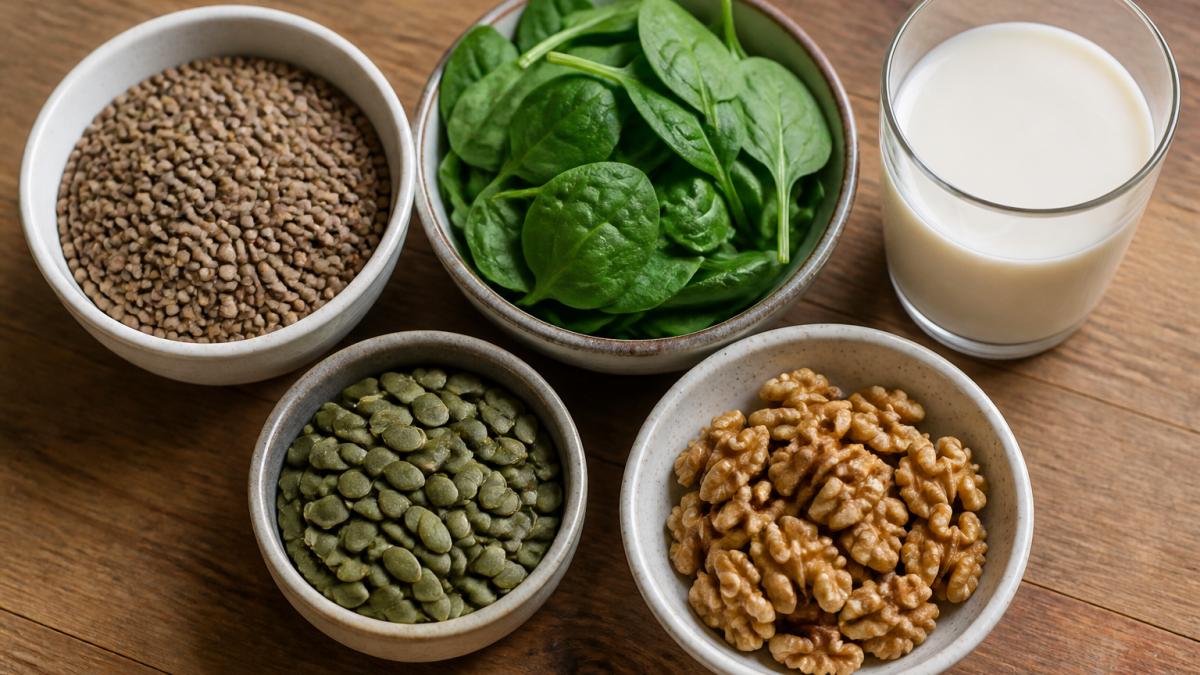
| Nutrient | Plant-Based Sources | Why It Matters |
|---|---|---|
| Protein and amino acids | Lentils, chickpeas, tofu, hemp seeds | Supplies keratin's building blocks |
| Iron | Lentils, spinach, fortified cereals | Part of normal oxygen transport |
| Zinc | Pumpkin seeds, cashews, oats | Tissue repair, protein synthesis |
| Biotin and B vitamins | Legumes, oats, nutritional yeast | Normal hair maintenance |
| Omega-3 fatty acids | Walnuts, flaxseed, chia seeds | Scalp environment support |
| Vitamin C | Citrus, bell peppers, broccoli | Collagen formation, iron absorption |
Pair iron-rich plants with a vitamin C source in the same meal. That single habit does more for a plant-based eater than adding another capsule to the shelf.
Choosing a Plant-Based Biotin Supplement
A plant-based biotin supplement is only as good as its label discipline, and the category has a credibility problem worth naming. Biotin is essential, but deficiency is uncommon in people eating a varied diet, and high doses are not automatically better. Marketing has run well ahead of the evidence for biotin as a standalone hair ingredient. The smart move is to judge a plant-based formula on the whole label, not on the biotin number printed in the largest font.
What "Plant-Based" Actually Means on a Label
"Plant-based" is not a regulated term on a supplement label. A product can carry the phrase and still contain gelatin capsules, beeswax, lanolin-derived vitamin D3, or keratin sourced from sheep's wool. If strict vegan status matters, look for a third-party vegan certification mark such as the Certified Vegan logo or the Vegan Action mark rather than trusting the front of the bottle; otherwise check the ingredient list and capsule material.
Nutrient Forms Matter More Than the Front Label
Two supplements can list the same nutrient and behave differently in the body. Form questions worth asking:
- Vitamin B12: methylcobalamin and cyanocobalamin are both effective; cyanocobalamin is the more studied form and is widely used in fortified foods.
- Vitamin D: D2 (ergocalciferol) is plant-derived; D3 (cholecalciferol) is often lanolin-derived unless the label specifies a vegan D3 source such as lichen.
- Iron: supplement only when a need is identified, and ask a clinician or pharmacist which form suits you.
None of these form differences guarantees a better result. They are simply the details that separate a thoughtfully formulated product from one that lists impressive-sounding ingredients without addressing how the body uses them.
The Plant-Based Absorption Problem
Plant-based eaters face two absorption issues labels rarely address:
- Phytates in grains, legumes, and seeds bind minerals including iron and zinc, reducing how much the body absorbs. Soaking, sprouting, fermenting, and leavening reduce phytate content.
- Non-heme iron from plants is absorbed less efficiently than heme iron from animal sources. Pairing plant iron with a vitamin C source in the same meal improves absorption, which is why a formula that includes vitamin C alongside iron is doing something more useful than one that lists iron alone.
A supplement cannot fully compensate for a diet that ignores these factors. It can, however, be formulated with them in mind.
A Label Audit You Can Run in Two Minutes
- Does the label list every ingredient with its exact amount per serving?
- Is the biotin dose proportionate, rather than a headline number far above what the body needs?
- Does the formula include minerals and protein cofactors, or is it biotin with filler?
If a product promises to stop hair loss or reverse thinning, that claim alone is a reason to walk away. Cosmetics and supplements cannot lawfully make disease claims of that kind.
Biotin Supplement Safety: Doses, Interactions, and Label Checks
Biotin supplement safety comes down to three things: dose realism, interaction awareness, and label verification. The FDA does not review dietary supplements for safety and effectiveness before they reach the market, which places the burden of judgment on the buyer FDA guidance on dietary supplements.
A few further checks:
- Compare the ingredient list against a third-party testing seal or a published certificate of analysis.
- Check whether fat-soluble vitamins such as A and E are dosed conservatively, since they accumulate in the body.
- Confirm the serving size matches what you will actually take daily.
- Look for a customer service contact and a real company address.
On interactions: if you take any prescription medication, ask your pharmacist before adding a supplement. High-dose biotin specifically can interfere with certain lab tests, according to the FDA.
Hair Vitamins Without Deficiency: Who Actually Benefits
Hair vitamins without deficiency is the question the industry avoids, because the honest answer shrinks the market. Correcting a nutrient shortfall differs from supplementing an already adequate diet, and the evidence for the second is weaker and more mixed.
Who tends to benefit most:
- People with restricted diets, including poorly planned plant-based eating, where iron, zinc, or B12 intake may fall short
- Women in the postpartum period or during perimenopause, when nutritional needs and hair cycling shift
- Anyone recovering from illness or a period of low protein intake
Who should temper expectations: anyone with hereditary pattern thinning, scarring scalp conditions, or an untreated thyroid or autoimmune issue.
This is where an inside + outside approach makes sense as a framework rather than a promise. One transparency note for plant-based readers: the BENEGANIC Keratin Hair Booster formulas and the 20-Day Intensive Hair Care phase are built around Cynatine HNS, a keratin derived from sheep's wool, so they are not vegan. In a 90-day placebo-controlled trial, 50 women took Cynatine HNS, a hydrolyzed keratin, combined with vitamins and minerals, and showed statistically significant improvements in the measured hair and nail parameters compared with placebo. That finding applies to the studied ingredient formula, group, and duration, not automatically to every finished product that contains the ingredient.
When to See a Professional About Hair Shedding
Sudden, persistent, unexplained, or patchy hair loss warrants evaluation by a dermatologist or qualified healthcare professional, as does shedding with scalp inflammation, pain, scaling, or itching, and any loss beginning alongside a new medication.
Bring a timeline of when shedding started, photographs, a list of medications and supplements, and any recent illness, pregnancy, or major stressor. A clinician may recommend bloodwork when clinically appropriate.
| Sign | What It May Suggest | Next Step |
|---|---|---|
| Diffuse shedding after stress or birth | Temporary shedding pattern | Monitor, support nutrition, consult if it persists |
| Patchy, smooth bald spots | Needs clinical assessment | See a dermatologist promptly |
| Thinning along the part line | Pattern thinning | Discuss options with a professional |
| Scalp pain, scaling, or redness | Possible inflammatory condition | Book a medical evaluation |
Conclusion: Building a Realistic Plant-Based Hair Routine
A plant based hair growth vitamins guide is only useful if it leaves the reader with something workable. Eat protein at every meal, pair iron sources with vitamin C, cover zinc and omega-3s through seeds and legumes, and choose a supplement whose label you can verify. Expect support, not transformation, and give any routine enough time to be judged fairly.
For readers who are not strictly vegan and want nutritional support designed around hair structure, Beneganic USA offers an inside + outside approach: Cynatine HNS keratin formulas with selected vitamins and minerals, age-specific options for women 18 to 45 and 45 plus, a men's formula, and a 20-day intensive phase to begin. Explore Hair Health Solutions and build the routine on evidence rather than hope.
These statements have not been evaluated by the Food and Drug Administration. This product is not intended to diagnose, treat, cure, or prevent any disease. This article is educational and is not medical advice.
Frequently Asked Questions
Which vitamins are most effective for hair growth?
No single vitamin works for everyone. Research points to several nutrients that support normal hair structure and growth, including vitamin D, iron, zinc, B vitamins, and protein. A 2023 systematic review in JAMA Dermatology found that evidence quality varies widely by ingredient, meaning a nutrient's biological role does not guarantee that supplementing improves hair outcomes. The most effective choice depends on your diet, health status, and whether a shortfall exists.
Is there a plant-based biotin supplement available?
Yes. Many supplements now use plant-sourced biotin, and some hair formulas list it alongside other nutrients. When comparing options, check the ingredient panel for the biotin amount per serving and whether the formula includes other nutrients relevant to hair, such as zinc or vitamin D. A plant-based biotin supplement can fit a vegan diet, but biotin deficiency is uncommon, so a higher dose is not automatically better for hair.
Can plant-based hair vitamins help if you do not have a nutrient deficiency?
The evidence here is limited and mixed. Correcting a shortfall is different from taking extra nutrients when your levels are already adequate. Some research examines specific formulas or ingredients in defined populations, but those results do not transfer to every product. If your diet is varied and your levels are normal, a supplement may not change your hair. A healthcare professional can help you decide whether testing or supplementation makes sense.
Are high-dose biotin supplements better for hair?
Not necessarily. Biotin is essential, but deficiency is uncommon, and high doses are not automatically more effective. High-dose biotin can also interfere with certain lab tests, so tell your healthcare provider about any supplements you take before bloodwork.
How can I get hair-supporting nutrients from plant-based foods?
Build meals around legumes, which supply protein, iron, zinc, and biotin. Add leafy greens for iron and folate, nuts and seeds for zinc and vitamin E, and fortified plant milks or UV-exposed mushrooms for vitamin D. Pair iron-rich foods with vitamin C sources like citrus or bell peppers to support absorption, and include omega-3 sources such as walnuts, flaxseed, or algae oil.
When should I talk with a healthcare professional about thinning hair?
Speak with a dermatologist or qualified healthcare professional if you notice sudden, persistent, or patchy hair loss, scalp inflammation, or shedding that does not improve. These signs can point to thyroid disorders, autoimmune conditions, telogen effluvium, or other causes that nutrition alone will not address. A professional can assess your situation and may recommend testing when clinically appropriate. Do not stop or change prescription medication without speaking with your provider first.