


Hair Wellness Routine for Thinning: A 2026 Guide
Table of Contents
- What a Hair Wellness Routine for Thinning Can and Cannot Do
- How Often to Wash Thinning Hair
- A Scalp Care Routine for Thinning Hair That Supports the Follicle Environment
- Hair Care for Fine Hair: Cleansing, Conditioning, and Gentle Handling
- Nutrition for Healthy Hair: What the Evidence Actually Supports
- When to See a Dermatologist About Thinning Hair
- Tracking Progress and Troubleshooting Your Routine
- Frequently Asked Questions
Last Updated: October 15, 2026
What a Hair Wellness Routine for Thinning Can and Cannot Do
A hair wellness routine for thinning is a consistent set of habits that supports the scalp environment and hair's nutritional needs. It can reduce avoidable damage and support normal hair structure, but it cannot diagnose or treat a medical cause of hair loss.
That distinction matters, and it is where most advice online falls short. This guide covers what a routine can realistically do, what it cannot, and how to build one that fits your hair type and scalp.
Thinning, Fine Hair, and Breakage Are Not the Same Thing
These three get lumped together constantly but need different responses.
- Fine hair is a texture. You are born with it. Strands are small in diameter, so the hair looks less dense.
- Thinning means density is lower than it used to be, with fewer strands over time.
- Breakage is damage. Strands snap along the length from heat, tension, or rough handling.
Why does the split matter? A volumizing shampoo helps fine hair look fuller but does nothing for breakage, and gentle handling reduces breakage without changing a medical cause of thinning.
Short broken pieces around the hairline usually point to damage. Get the category right before you buy anything.
How Often to Wash Thinning Hair
There is no single correct wash frequency. The right interval depends on your scalp's oil production, product use, sweat, and how your scalp feels between washes. Match frequency to your scalp, not a rule.
Sebum, the oil your scalp produces, is not the enemy; in normal amounts it supports a healthy scalp environment. The problem is accumulation: when sebum mixes with styling product, dry shampoo residue, dead skin cells, and debris, that layer can weigh down fine hair so the scalp shows through more.
Find your baseline by scalp type
Use this as a starting point, then adjust to how your scalp behaves:
- Oily scalp (greasy by end of day one, flat roots): daily or every-other-day washing is reasonable. Waiting longer usually makes hair look flatter, because oil collapses what volume you have.
- Normal scalp (comfortable through day two): every other day, or every third day if you use little product and do not sweat much.
- Dry scalp (tight, flaky, itchy after washing): every two to three days, and consider whether a harsh or heavily fragranced shampoo is contributing. Dryness is often a product problem, not a frequency problem.
Adjust for sweat, product, and activity
Two factors override your baseline:
- Sweat. After a hard workout, rinse or wash. Sweat and heat sit on the scalp, and leaving them there does not help the scalp environment.
- Product load. If you use mousse, leave-in treatments, or dry shampoo, you are adding a layer that needs to come off. Dry shampoo in particular is a bridge, not a replacement: it absorbs oil and buys you a day, but used repeatedly without washing it contributes to buildup.
A simple wash-day and non-wash-day structure
A routine is how wash days and non-wash days fit together.
Wash day:
- Shampoo with fingertips, not nails, using light pressure in small circles. Focus on the scalp, not the ends.
- Rinse thoroughly; leftover product can irritate.
- Condition mid-lengths and ends only, not the scalp.
- Detangle with a wide-toothed comb, working from the ends upward.
- Air-dry when you can, or use low heat and keep the dryer further from the hair.
Non-wash day:
- Leave the scalp alone unless it feels oily or itchy.
- If you need a refresh, a light mist of water at the roots and a few seconds of low-heat drying can lift volume without product.
- Use dry shampoo sparingly and only at the roots, and plan to wash it out within a day or so.
- Avoid adding more leave-in product on top of yesterday's product.
What wash frequency is not
The American Academy of Dermatology treats gentle hair care as a basic measure, not a treatment. Wash frequency is maintenance, not medicine: it supports a clean scalp environment and helps fine hair look its fullest, but it does not change a medical cause of hair loss.
A Scalp Care Routine for Thinning Hair That Supports the Follicle Environment
A scalp care routine for thinning hair comes down to three things: cleanse gently, do not irritate, and keep the area free of buildup. Hair forms at the root, about 4 mm beneath the scalp surface, and the simplest thing you can do from the outside is avoid making that environment worse:
- Shampoo with fingertips, not nails. Use light pressure in small circles.
- Rinse thoroughly. Leftover product can irritate.
- Apply a scalp product only if it is made for the scalp.
Scalp cleansing matters most for people who use styling products, dry shampoo, or leave-in treatments. Those layers accumulate. A clarifying shampoo every so often can help remove them.
Hair Care for Fine Hair: Cleansing, Conditioning, and Gentle Handling
Hair care for fine hair is mostly about what you avoid. Fine strands have less structural bulk, so they show damage faster and respond quickly to rough treatment.
Choose a shampoo labeled for volume or fine hair. These formulas tend to be lighter and rinse clean. Heavy, rich formulas can weigh fine hair down and make the scalp look more visible.
Conditioner Placement and Detangling With a Wide-Toothed Comb
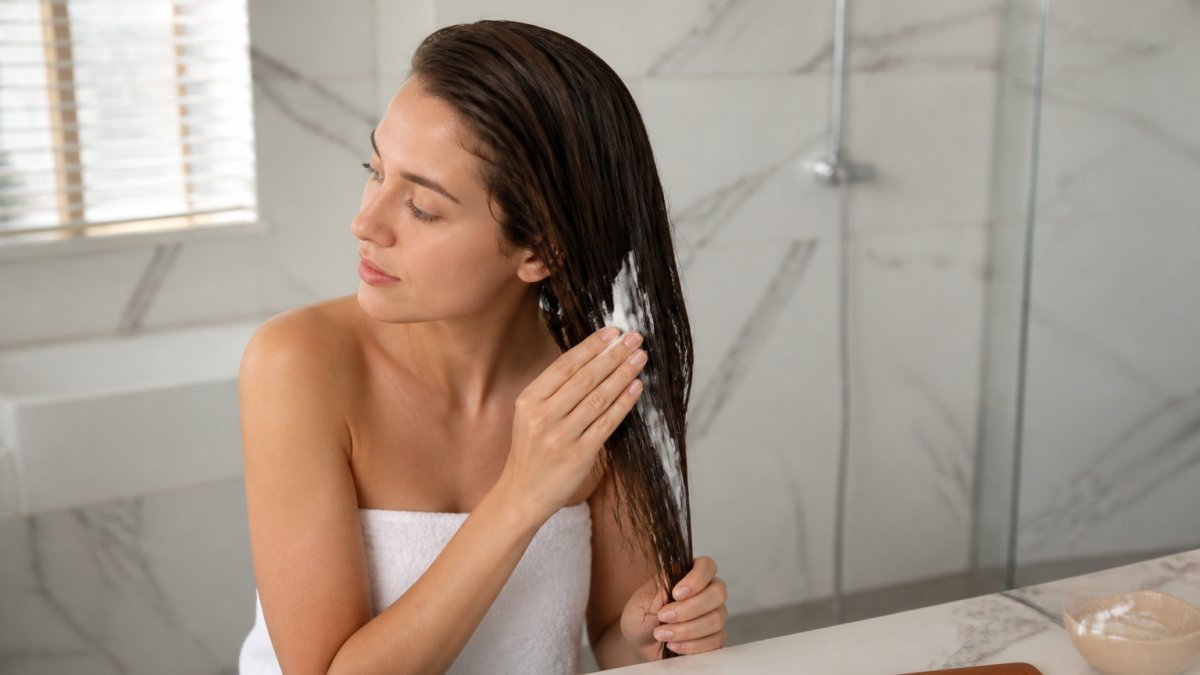
Put conditioner on the mid-lengths and ends, not the scalp. The scalp produces its own oil, and adding conditioner there flattens the roots and can contribute to buildup. Detangle from the ends upward with a wide-toothed comb on damp hair, never ripping through a knot from the top down. Avoid tightly pulled hairstyles too; tight ponytails and braids put continuous tension on the hairline.
Volumizing Products, Dry Shampoo, and Heat Styling Limits
Volumizing products work by coating strands and lifting the root: mousse at the roots, a light spray at the mid-lengths. Dry shampoo is fine in small doses, but used too often without washing it builds up on the scalp. Heat styling is where fine hair loses ground fastest, so keep the dryer on a lower setting, hold it further from the hair, and air-dry when you can.
Nutrition for Healthy Hair: What the Evidence Actually Supports
Nutrition supports normal hair structure, but it is not a substitute for medical care. Hair is built from protein and needs a range of vitamins and minerals to form normally.
That distinction gets blurred constantly online: making up a nutrient shortfall and taking a specific formula to support hair are different claims with different evidence behind them.
Shortfalls vs. formula-level evidence
- Shortfalls: If a clinician identifies low iron, vitamin D, zinc, or another nutrient, addressing it is a conversation with that clinician, not a product choice. Iron in particular needs to reflect individual need, because excessive intake can be harmful. Do not self-prescribe high doses.
- Formula-level evidence: A 2023 systematic review in JAMA Dermatology found that the quality of evidence for hair supplements varies widely by ingredient. One example of ingredient-level research is a 90-day placebo-controlled trial of Cynatine HNS keratin combined with vitamins and minerals in 50 women, which found statistically significant improvements in the measured hair and nail parameters. Results like these describe the ingredient, the group, and the duration actually studied. They do not transfer automatically to other products.
What each nutrient actually does
- Protein provides the building blocks of the hair fiber. Most people eating a mixed diet meet their needs.
- Iron contributes to normal hair growth, but needs vary widely. Too much iron can be harmful, so intake should reflect individual need, ideally guided by a clinician.
- Biotin is essential, though deficiency is uncommon, and higher doses are not automatically better. High-dose biotin can also interfere with some lab tests, according to the FDA.
Realistic expectations: what changes and how fast
Hair grows about half an inch per month, and different routine steps do different things:
- Appearance and volume: Shampoo choice, conditioner placement, volumizing products, and drying technique can change how hair looks within a single wash. These are cosmetic effects, not structural ones.
- Breakage reduction: Gentler handling, wide-toothed detangling, lower heat, and avoiding tight styles can reduce snapping over weeks. This preserves the hair you have.
- Nutrition: Because new hair forms at the root and grows slowly, give any nutritional change at least three months of consistent daily use before judging it.
Where inside + outside fits
This is the reasoning behind the inside + outside approach. The visible hair fiber contains no living cells, so topical products work on the look and feel of hair you already have and on the scalp surface. Nutritional formulas supply selected nutrients, through the bloodstream, to the root where new hair forms. Beneganic USA builds its system around that pairing rather than treating one side as the whole answer. Some Beneganic hair formulas contain keratin derived from sheep's wool, so check the specific product if you prefer plant-based options.
When to See a Dermatologist About Thinning Hair
See a dermatologist if shedding is sudden, patchy, persistent, or accompanied by scalp inflammation. Those patterns point to causes a routine cannot address.
Signs that warrant an appointment:
- Sudden or rapid shedding
- Patchy areas or a part that keeps widening
- Redness, scaling, itching, or pain on the scalp
- Changes alongside fatigue, weight change, or menstrual changes
A healthcare professional may recommend testing when it is clinically appropriate; that is a decision for them, not a checklist you run at home. And never stop or change a prescription medication without talking to your prescriber first.
Tracking Progress and Troubleshooting Your Routine
Track how your hair looks and how it behaves. Pick a simple method and stick with it.
- Take a photo in the same light, from the same angle, with your hair styled the same way, on the first of each month.
- Note how much hair collects in the drain or on your brush.
- Write down any changes: new medication, diet shift, stressful period, pregnancy.
Hair grows slowly, so a routine needs time before you judge it. If nothing changes after a few months of consistency, that is useful information. It may mean the routine is fine and the cause sits elsewhere.
Common troubleshooting:
- Still flat at the roots? You may be using too much product or conditioning too close to the scalp.
- Scalp itchy or flaky? Stop the newest product first and see if it settles.
- Shedding increased? Look at recent changes in stress, diet, or medication, and book an appointment.
If you want to add internal support, Beneganic USA offers the 20-Day Intensive Hair Care as a short kickstart phase, plus daily Keratin Hair Booster formulas for women 18-45, women 45 and older, and men.
Hair care is only part of the picture. Beneganic USA approaches hair health from both sides: nutritional formulas with Cynatine HNS keratin to support normal hair structure from within, and topical care for the scalp environment.
These statements have not been evaluated by the Food and Drug Administration. This product is not intended to diagnose, treat, cure, or prevent any disease.
This article is educational and is not medical advice.
Frequently Asked Questions
Is a regular routine really good for thinning hair?
A consistent routine helps reduce avoidable damage and supports a healthy scalp environment. Gentle shampooing, conditioning the lengths, and avoiding tightly pulled hairstyles all protect the hair you have. A routine will not address a medical cause, so if shedding is sudden, patchy, or persistent, see a dermatologist or qualified healthcare professional.
How often should you wash thinning hair?
There is no single correct wash frequency. It depends on your scalp oil production, activity level, and the products you use. If your scalp feels oily or you use styling products, washing more often is reasonable. If your scalp is dry, you can stretch wash days. What matters most is a gentle shampoo, fingertip scalp cleansing, and not letting product buildup sit for days.
Can nutrition make a difference for fine or thinning-looking hair?
Nutrition supports normal hair structure and maintenance. But thinner-looking hair does not automatically mean you have a deficiency, and research on specific ingredients is limited to the groups and durations studied. A balanced diet and, where appropriate, targeted nutritional support may help maintain healthy-looking hair, but they do not replace a medical evaluation.
When should I talk to a dermatologist?
Book an appointment if shedding is sudden, persistent, or patchy, if you notice scalp redness, scaling, or soreness, or if changes appear alongside fatigue, weight change, or menstrual changes. Do not stop or change any prescription medication without speaking with your healthcare provider first.